Unknown Mental Symptoms From Watching Porn
- Rebooter App
- Jun 3
- 3 min read
We’ve all heard the obvious warnings about pornography: it can distort expectations, strain relationships, and become a time sink. But many of the deeper, subtler mental and emotional costs fly under the radar. They don’t announce themselves with sirens—they creep in quietly, affecting focus, mood, confidence, and drive in ways that feel mysterious and frustrating.
If you’ve ever felt “off” without quite knowing why, this list may hit home. These are some of the lesser-discussed mental symptoms that regular porn use can create or worsen.
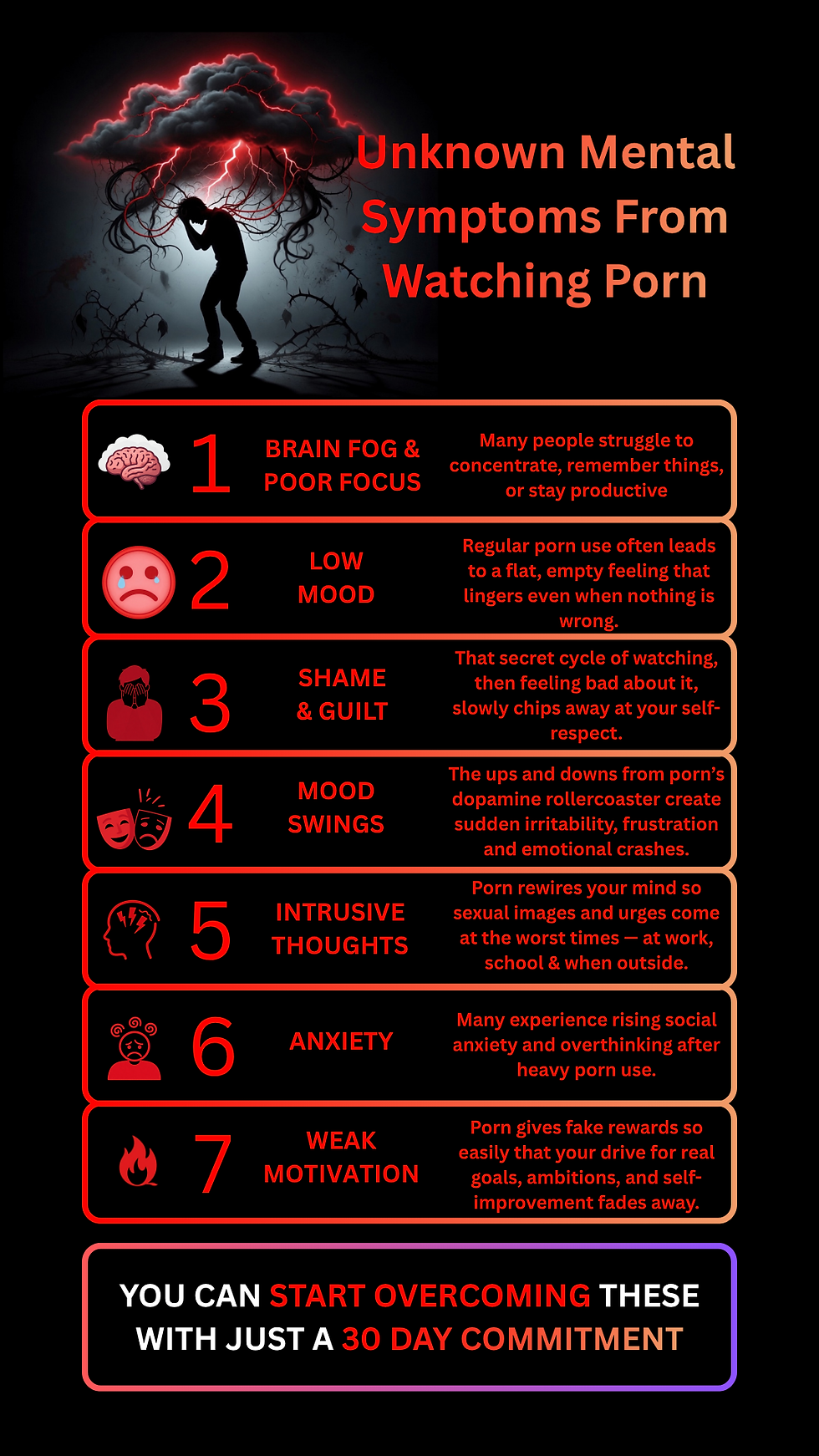
1. Brain Fog & Poor Focus
Many people who consume porn regularly report struggling to concentrate, remember details, or stay productive. It’s as if their mental clarity has been dialed down.
Porn delivers intense, rapid dopamine hits that can desensitize the brain’s reward system over time. Everyday tasks—like reading, working, or even having a normal conversation—start to feel boring by comparison. The result? Scattered attention and that annoying “fog” that makes simple things harder than they should be.
2. Low Mood
A flat, empty, or vaguely dissatisfied feeling that lingers even when nothing is objectively wrong.
Porn creates artificial peaks of pleasure followed by inevitable drops. Over time, this can leave your baseline mood lower than it used to be. You might feel emotionally numb or like you’re going through the motions, wondering why nothing excites you the way it once did.
3. Shame & Guilt
That secret cycle: watching, then feeling bad about it, which slowly chips away at your self-respect.
The shame isn’t always explosive. Often it’s a quiet, background noise of self-disappointment that erodes confidence over months or years. It can make you withdraw from people, avoid vulnerability, or feel unworthy of good things in life.
4. Mood Swings
Sudden irritability, frustration, or emotional crashes that seem to come out of nowhere.
Porn’s dopamine rollercoaster trains the brain to expect big, fast highs. When real life doesn’t deliver that same intensity, small setbacks feel disproportionately upsetting. One minute you’re fine; the next you’re snapping at loved ones or spiraling into frustration.
5. Intrusive Thoughts
Sexual images and urges popping into your head at the worst possible moments—at work, in class, during conversations, or while trying to relax.
This is one of the most frustrating symptoms. The brain becomes wired to associate certain triggers with porn, making it hard to stay present. These intrusive thoughts can create a sense of losing control and make normal social or professional situations feel exhausting.
6. Anxiety
Rising social anxiety, overthinking, and general nervousness that seems to intensify after heavy use.
Porn consumption often happens in isolation, reinforcing avoidance patterns. When you step back into real-world interactions, the contrast can feel overwhelming. Many people notice increased anxiety around dating, socializing, or even casual encounters because their brain has been trained on a very different (and unrealistic) script.
7. Weak Motivation
A fading drive for real goals, ambitions, and self-improvement.
Why grind toward meaningful accomplishments when instant gratification is just a few clicks away? Porn provides fake rewards so easily that the motivation required for delayed gratification—studying, exercising, building a business, or nurturing relationships—starts to evaporate. Over time, you may feel stuck, knowing what you could be doing but lacking the internal fire to actually do it.
These symptoms don’t affect everyone the same way, and they don’t appear overnight. But for many people, they accumulate quietly until life feels harder than it needs to be.
The hopeful part? You can start reversing many of these effects with commitment. A growing number of people report significant improvements in clarity, mood, motivation, and self-respect after just a 30-day break from porn. The brain is remarkably resilient. When you remove the artificial stimulation, it begins to recalibrate—often faster than expected.
If any of these symptoms sound familiar, consider it a gentle nudge rather than a reason for self-judgment. Awareness is the first step. Small, consistent changes—like a 30-day reset, more movement, better sleep, and real-world connections—can create surprisingly big shifts.
You deserve a mind that feels sharp, motivated, and at peace. Sometimes the bravest thing you can do is simply start.
Have you experienced any of these symptoms? What helped you the most? Feel free to share in the comments.


Comments